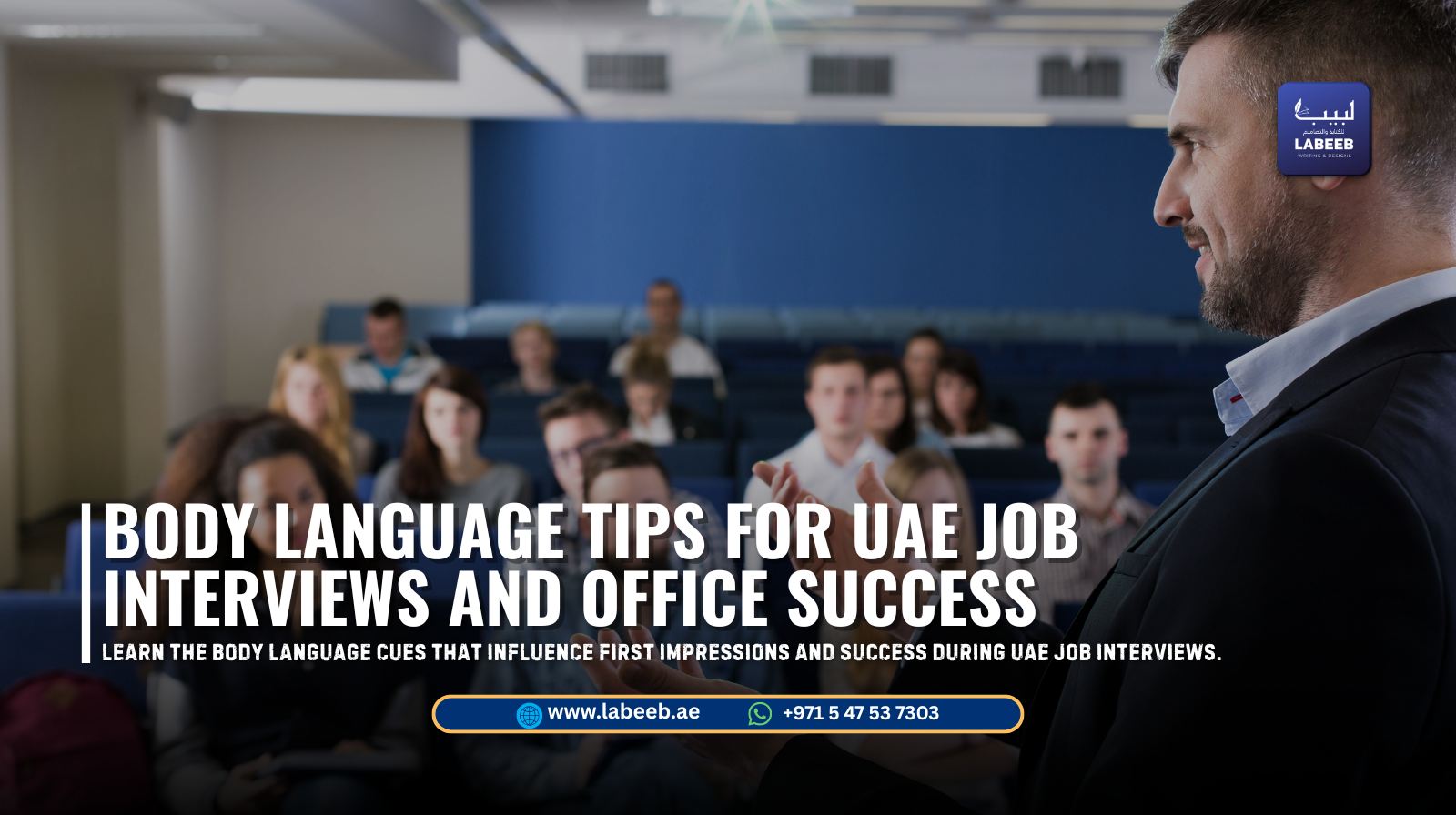
In a highly competitive job market like the UAE, how you move, sit, stand and gesture often speaks louder than your résumé or cover letter. Whether you’re in a job interview, meeting a senior leader, or collaborating in a multicultural team setting, your body language tells a story. The guide on Labeeb Writing & Designs, Body Language Tips for UAE Job Interviews and Office Success, offers proven strategies to help you make the right impression. Labeeb
Why Body Language Matters in the UAE
The UAE workplace is unique: diverse teams, international colleagues, high expectations for professionalism and cultural sensitivity. In such an environment:
-
First impression counts instantly.
-
Silent signals (posture, eye contact, facial expression) form part of your professional brand.
-
Recruiters say confident body-language influences their hiring decisions. Labeeb
Therefore, mastering non-verbal cues is essential—not optional.
1. Make a Strong Entrance
Your interview begins the moment you walk into the room.
-
Walk with purpose, shoulders relaxed yet upright, eyes forward.
-
Offer a polite handshake (which in UAE culture means same gender handshake unless female interviewer initiates).
-
Greet respectfully: “Good morning” or “Assalamu Alaikum”.
-
Avoid looking at your phone or fidgeting as you enter.
These simple actions signal confidence, respect and readiness. Labeeb
2. Eye Contact & Facial Expression
Non-verbal connection builds trust and leaves an impression.
-
Maintain natural eye contact: around 3–5 seconds at a time.
-
Smile gently—not forced—to show openness and approachability.
-
In group or panel settings divide your attention respectfully among participants.
-
Avoid intense staring or drifting gaze which can signal anxiety or distraction. Labeeb
3. Posture That Speaks Confidence
How you sit or stand conveys your comfort and professionalism.
Positive posture tips:
-
Sit upright with shoulders back but relaxed.
-
Keep both feet flat on the floor—no crossing ankles or fidgeting.
-
Slightly lean forward when listening—to show engagement.
-
Keep your hands visible; avoid folding arms (which can signal defensiveness).
For remote interviews, ensure your upper body is visible and posture remains attentive. Labeeb
4. Gestures & Hand Movements
Gestures can support your message—but over-use or cultural misinterpretation can harm it.
-
Use open palm gestures when explaining; signals honesty.
-
Keep gestures below shoulder level for better visual impact.
-
Avoid pointing fingers or excessive motion which may distract.
-
Practice in front of a mirror or record yourself to refine.
By aligning gestures with your message, you reinforce credibility in front of recruiters and colleagues. Labeeb
5. The Power of a Genuine Smile
A friendly, genuine smile communicates warmth across cultures—especially important in the UAE’s multicultural workplaces.
-
Smile when greeting, when listening and when closing conversation.
-
Avoid forced or overly broad smiles—they may appear insincere.
A confident smile helps you build rapport quickly. Labeeb
6. Handshake & Greeting Etiquette in the UAE
The handshake sets the tone.
-
Offer a light but firm handshake when it is culturally appropriate.
-
Combine handshake with a nod and direct greeting.
-
If the other person is of opposite gender and doesn’t initiate, wait—respect cultural norms.
A simple, respectful greeting demonstrates your cultural awareness and professionalism. Labeeb
7. Mastering Body Language in Virtual Interviews
Remote interviews are now routine in Dubai, UAE and beyond—your body language still matters.
Virtual checklist:
-
Ensure your camera is at eye level, background tidy and lighting good.
-
Maintain “digital eye-contact” by looking into the camera, not the screen.
-
Nod, smile, and show engagement even through the screen.
-
Keep gestures contained within camera frame.
-
Close with a proper thank you and full attention.
In virtual settings, non-verbal clarity becomes even more important. Labeeb
8. Reading Others’ Body Language: A Competitive Advantage
Networking, meetings, and interviews all involve two-way interaction. You also need to observe and respond.
Look out for cues such as:
-
Crossed arms → Possible resistance or discomfort.
-
Leaning forward → Strong interest or agreement.
-
Avoidance of eye contact → Disengagement or uncertainty.
Responding appropriately with your own body language—open posture, nods, and clear eye contact—builds connection and respect. Labeeb
9. Practice & Feedback: Make It Natural
Improving non-verbal communication is a skill, not an accident.
-
Record yourself in mock interviews or samples.
-
Use feedback from colleagues or coaches to identify micro-behaviors.
-
Attend training sessions—Labeeb’s interview preparation service includes body-language coaching:
https://www.labeeb.ae/interview-preparation Labeeb -
Make adjustments until confident and natural.
Final Thoughts
Your body language is your silent ambassador—whether in interviews, meetings, or remote calls. In the UAE’s dynamic and diverse professional landscape, mastering non-verbal signals gives you a distinctive edge. Combine posture, gaze, gestures and cultural etiquette and you’ll project confidence, respect and competence. With consistent practice and feedback, you’ll not only stand out in your next interview—but you’ll carry your presence into every professional setting.
Invest in your body language the way you invest in your résumé or certifications. The next impression you make could be your biggest professional opportunity.
Comments
Post a Comment